
Rolf Albach, Chair of the GDCh Division "Association for Chemistry and Economics" (VCW), is a member of our Sustainability Commission. For him, sustainability means preserving the freedom for future generations to live a good life within natural limits—with their own ideas about what constitutes this good life.
He sees the GDCh's sustainability strategy as indispensable, as chemistry enables a good life for 10 billion people, but also brings with it side effects. This makes research and teaching in global collaboration all the more important. Chemistry and sustainability seem to be a contradiction for many – Rolf Albach agrees, but emphasizes pragmatically: There is no reset button to the 17th century. This contradiction must be resolved through research and teaching.
He explains his involvement in the commission modestly yet decisively: Someone has to do it. With his qualifications in science, business, and politics, coupled with his enthusiasm for the task, he wants to make his contribution.
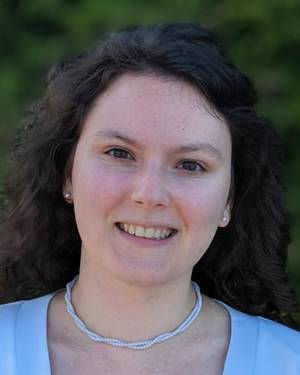
For Anna Emmerich, PhD student at the Max Planck Institute for Chemical Energy Conversion and member of the JCF Sustainability team, sustainability means above all: thinking ahead. It shouldn't just be the direct production of products that is considered, but the entire product life cycle, including ecological and social consequences. Sustainability should be a guiding principle that is always taken into account – not an optional positive side effect.
A sustainability strategy is important for the GDCh because there are already many good approaches and projects for greater sustainability. A joint strategy can consolidate these to achieve even more together. The GDCh has the opportunity to be a pioneer and, as a role model for industry and science, to present companies and universities with a guide for their own sustainability strategies.
Chemistry and sustainability seem contradictory to many. Anna Emmerich wants to help change that perception. Even though the industry requires more complex solutions than other fields, chemists have more diverse ways of tackling the problem. Furthermore, sustainable solutions can also be provided to other industries – chemistry can be a driving force for greater sustainability.
She is involved in the GDCh Sustainability Commission because it is important to her that students and doctoral candidates are also represented. This facilitates the exchange between generations within the GDCh. Her personal goal is for all chemistry students to become familiar with the meaning of sustainable chemistry during their studies. She also wants to contribute to this within the JCF's Sustainability Team. The commission work provides her with new input, while simultaneously allowing her to convey feedback from students and doctoral candidates back to the commission.
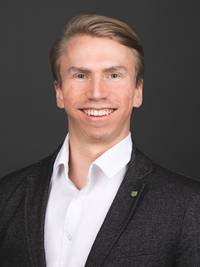
Kevin Keller, IYCN Executive Board member and doctoral student in bioinorganic chemistry at Justus Liebig University Gießen, is involved in our Sustainability Committee with a clear vision: He wants to ensure that future generations can continue to enjoy our planet. He has very concrete images in mind—forests, green meadows, and a bright blue sky—that remind him daily why responsible stewardship of our earth is so important.
As a young scientist, Kevin knows that his generation will feel the consequences of today's environmental pollution most acutely. This is precisely why he now wants to take on responsibility and work on solutions – not only for Germany, but worldwide. He sees the GDCh as having a special duty in this regard: As a scientific society, we must demonstrate ways to address the pressing challenges of our time. A well-thought-out sustainability strategy provides the necessary guidance and creates a common thread that embeds sustainability in research, teaching, and everyday life.
Chemistry and sustainability seem to be a contradiction for many. Kevin sees it differently: Even if research sometimes unavoidably generates waste, these short-term burdens are necessary investments in a sustainable future. Only through targeted experiments today can we develop the green technologies of tomorrow that will benefit our society in the long term.
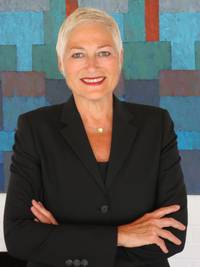
Dr. Hildegard Nimmesgern, from the GDCh Commission for Equal Opportunities in Chemistry, sees sustainability as the order of the day to preserve life for people, animals, and plants on our planet. For her, only a globally sustainable chemistry sector can counteract the exploitation of our Earth and climate change. As a scientific society for chemistry, the GDCh must therefore assume responsibility and pool its expertise to make it available to all decision-makers.
Chemistry and sustainability don't have to be mutually exclusive, according to Hildegard Nimmesgern: For her, chemistry is a key science that enables productivity and prosperity through innovation. At the same time, it has the potential to develop solutions to existing problems and eliminate injustices. A sound understanding of substances and materials creates the necessary basis for their proper handling and thus forms the foundation for a resource-efficient circular economy.
Within the GDCh Sustainability Commission, she is particularly committed to the social pillar of sustainability. People must be included in the transformation process – through fair and respectful treatment and the equal inclusion of diverse perspectives and experiences. Only in this way can future challenges be successfully met.

For Dr. Stefanie Wieck, Deputy Chair of the " environmental chemistry & Ecotoxicology" Division , sustainability primarily means showing respect – for the planet and for other people, regardless of whether they are alive today or will be in the future. In this context, humanity and nature cannot be considered separately, in line with the concept of planetary health, because all life on Earth is interconnected. Only the system as a whole can be stable. Since the planetary limit of what is tolerable for chemicals has already been exceeded, changes are urgently needed.
The German Chemical Society (GDCh) considers an overarching sustainability strategy essential, as its more than 28,000 members naturally hold diverse perspectives on chemistry. This diversity is valuable and can provide the foundation for the GDCh to set important priorities, enabling chemicals to contribute to sustainability. However, it also presents a challenge, as compromises between all perspectives must be reached within the GDCh itself before credible communication with the public is possible. The sustainability strategy sets important guidelines for this process of finding compromises, outlining how comprehensively proposed solutions must be discussed.
For Stefanie Wieck, chemistry and sustainability are not contradictory: Chemistry can contribute to sustainable solutions if the potential consequences for people and the environment are considered from the outset in the design and application of products. Circularity, the safe and sustainable by design concept, and sufficiency are important approaches that should be more widely known. The German Chemical Society (GDCh) could play a key role in this area in the future by providing guidance and supporting informed decision-making.
With her involvement in the GDCh Sustainability Commission, Stefanie Wieck primarily aims to raise the profile of the work of her Division , "environmental chemistry and ecotoxicology," and to integrate it more effectively into discussions and the GDCh's public image. Sustainable solutions are impossible without a sound understanding of the environmental problems caused by chemicals. She also sees the commission's work as an opportunity to strengthen networking among the Divisions and foster understanding of their respective positions and concerns.
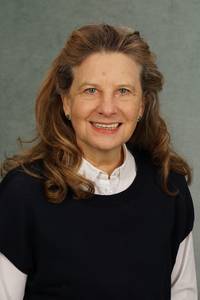
Dr. Eva Elisabeth Wille, Chair of the GDCh Division of Senior Expert Chemists (SEC), is convinced that sustainable chemistry is not a matter of age. For her, sustainability means above all one thing: concrete action instead of endless discussions. Sustainable chemistry cannot simply be prescribed or bottled like a magic potion – it requires courage and a willingness to take risks.
Chemistry and sustainability may seem contradictory to many, but Eva Wille and the SEC (Senior Experts for Chemistry) prove otherwise. The topics of their ten annual meetings demonstrate that the commitment to sustainable chemistry doesn't end with retirement. On the contrary, the experience of senior experts is indispensable for the transformation of the chemical industry. Eva Wille understands sustainable chemistry as a task that bridges generations, requiring young and old to work together on solutions. The SEC Division therefore actively participates in this crucial struggle, demonstrating that sustainability needs the expertise of all generations.
This page has been machine translated. If you have any feedback or comments please feel free to contact us. 
last modified: 14.07.2026 08:59 H from Translator